
Frequently Asked Questions About Multi-Spindle Drill Heads
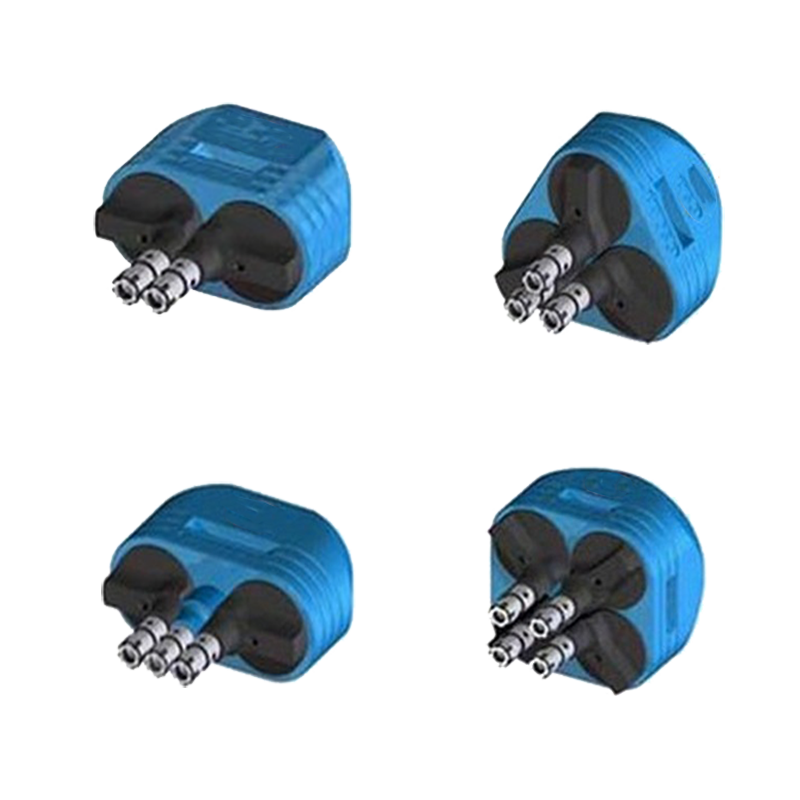 View our complete range of Multi-Spindle Drill Heads
Q: What is a multi-spindle drill head?
A: It allows several holes to be drilled or tapped simultaneously.
A multi-spindle drill head allows several drilling or tapping operations to be carried out simultaneously from a single machine spindle. Instead of machining each hole individually, multiple tools operate together, significantly reducing cycle time on repetitive components.
Q: What is a variable-axis multi-spindle drill head?
A: The individual spindle positions can be adjusted.
A variable-axis or adjustable multi-spindle head allows the position of the individual output spindles to be altered to suit different hole patterns and centre distances. This provides greater flexibility than a fixed-pattern multi-spindle head.
Q: What are multi-spindle drill heads used for?
A: They are used for repetitive multi-hole drilling and tapping applications.
Typical applications include fabricated components, flanges, brackets, plates, castings and production parts requiring repeatable hole patterns. They are particularly useful where several holes need to be produced on every component.
Q: What is the advantage of a multi-spindle head over drilling each hole individually?
A: Several holes can be produced during one machine cycle.
Producing several holes simultaneously can substantially reduce machining time. It can eliminate repeated positioning and individual drilling operations, making multi-spindle heads particularly effective for medium and high-volume production.
Q: Can multi-spindle heads be used for both drilling and tapping?
A: Yes, drilling and tapping configurations are available.
Multi-spindle heads can be used for drilling and tapping applications, subject to the selected head, tooling arrangement, required thread size and capability of the drilling or tapping machine.
Q: Are multi-spindle drill heads suitable for production work?
A: Yes, repetitive production is one of their principal applications.
Multi-spindle heads are particularly suited to production environments where the same drilling or tapping pattern is repeated across multiple components and reduced cycle time is important.
Q: How many spindles can a multi-spindle drill head have?
A: Two, three and four-spindle configurations are commonly available.
The appropriate number of spindles depends on the component and number of holes that need to be machined simultaneously. Other configurations and decentralised single-spindle arrangements may also be available.
Q: What is a decentralised single-spindle head?
A: It offsets the working spindle from the machine spindle centreline.
A decentralised head can be useful where the machine spindle cannot be positioned directly above the required hole because of component geometry, fixtures, machine construction or other physical restrictions.
Q: Can the spindle positions be adjusted?
A: Yes, on variable-axis multi-spindle heads.
The output spindles can be repositioned within the adjustment range of the particular head. This allows one adjustable head to accommodate different hole patterns where the required positions fall within its mechanical limits.
Q: What centre distances are available?
A: Centre-distance capability varies according to the size and design of the head.
Different multi-spindle head sizes are available for both closely spaced and wider hole patterns. The minimum and maximum centre distances required should be confirmed before selecting a head.
Q: Can non-standard hole patterns be accommodated?
A: Yes, many non-standard patterns can be achieved with adjustable heads.
Variable spindle positioning allows many different drilling patterns to be produced. Where a required pattern falls outside the capability of a standard adjustable head, a bespoke or application-specific solution may be required.
Q: What drilling capacities are available?
A: Capacity depends on the head, material, number of spindles and machine.
The correct head should be selected using the required drill diameter, workpiece material, drilling depth, number of simultaneous holes and available machine power rather than considering drill diameter alone.
Q: Does the material being drilled affect the capacity of the head?
A: Yes, material has a significant effect on cutting load.
Drilling and tapping loads vary according to the workpiece material, tool diameter, drilling depth and cutting conditions. The material should therefore always be specified when selecting a multi-spindle head.
Q: Can all of the spindles drill simultaneously?
A: Yes, simultaneous machining is the principal purpose of the head.
The machine input spindle drives the output spindles together, allowing multiple holes to be drilled or tapped during the same machining cycle.
Q: Can different diameter tools be used in the same multi-spindle head?
A: Potentially, depending on the head and tooling system.
Where different diameter tools are required simultaneously, the complete application should be reviewed to confirm tooling compatibility, spindle capacity and the cutting load generated by each operation.
Q: What spindle speeds can multi-spindle heads operate at?
A: Maximum speed varies according to the size and design of the head.
Smaller heads can generally operate at higher speeds than larger-capacity heads. The required cutting speed, tool diameter, head speed rating and machine spindle speed must all be considered.
Q: Does the multi-spindle head run at the same speed as the machine spindle?
A: Not necessarily.
The relationship between the machine input speed and output spindle speed depends on the gearing within the selected head. Both the machine speed and the permissible operating speed of the head need to be considered.
Q: How much production time can a multi-spindle drill head save?
A: The saving depends on the number of operations currently performed separately.
Where several holes are currently produced sequentially, drilling them simultaneously can remove multiple individual operations from every component cycle. The greatest savings are normally achieved on repetitive production work.
Q: What type of tooling can be used with a multi-spindle head?
A: Tooling depends on the spindle arrangement and intended operation.
Common arrangements include ER collet systems for drilling and tapping together with dedicated spindle extensions, tool holders and quick-change accessories where supported by the selected head.
Q: Can ER collets be used with multi-spindle drill heads?
A: Yes, where the head is designed for ER collet tooling.
ER collets provide a practical and widely used method of holding drills and other suitable cutting tools. The appropriate ER size depends on the spindle and head specification.
Q: Can individual tool lengths be adjusted?
A: Certain spindle and tooling arrangements allow individual adjustment.
Tool-length adjustment can help ensure that multiple cutting tools engage the workpiece correctly. The available adjustment method depends on the particular spindle and tooling configuration.
Q: Can a multi-spindle drill head be fitted to a conventional pillar drill?
A: Potentially, but the machine must be checked for compatibility.
The pillar drill must have a suitable spindle connection together with adequate power, torque, rigidity, speed range, working height and physical clearance for the proposed multi-spindle head and application.
Q: Can multi-spindle heads be fitted to drilling and tapping machines?
A: Yes, this is one of their principal applications.
Multi-spindle heads are particularly suited to pillar drills, production drilling machines, tapping machines and dedicated drilling and tapping units where several machining operations need to be performed simultaneously.
Q: Can an existing drilling machine be converted to use a multi-spindle head?
A: Often yes, subject to machine and application compatibility.
Important considerations include the machine spindle connection, available power and torque, speed range, quill capacity, working height and physical clearance around the proposed head.
Q: Can multi-spindle drill heads be used on CNC machines?
A: Yes, although they are also widely used on dedicated drilling machines.
The suitability of a multi-spindle head for a CNC machine depends on the spindle connection, available operating envelope, machine control strategy and the requirements of the drilling or tapping application.
Q: Does the drilling machine need additional torque for a multi-spindle head?
A: The machine must have sufficient torque for all simultaneous cutting operations.
Driving several cutting tools simultaneously can impose a significantly greater load than operating one drill. Machine power and torque are therefore important parts of the head-selection process.
Q: What information is required to select the correct multi-spindle drill head?
A: Component, hole pattern, material and machine information should be provided.
Ideally provide:
- Component drawing
- Number of holes
- Hole diameters
- Hole positions and centre distances
- Drilling or tapping requirement
- Material and thickness
- Required drilling or tapping depth
- Expected production quantity
- Machine make and model
- Machine spindle details
- Available spindle speeds and motor power
Q: Do I need to provide a component drawing?
A: A drawing is strongly recommended.
A component drawing allows the hole pattern, centre distances, component geometry and potential clearance restrictions to be assessed accurately before a multi-spindle head is selected.
Q: Why are minimum and maximum spindle centre distances important?
A: Every adjustable head has a defined positioning range.
The required hole pattern must fall within the minimum and maximum achievable positions of the individual output spindles. Centre-distance requirements are therefore fundamental to selecting the correct head.
Q: How does the number of holes affect multi-spindle head selection?
A: It determines the required number and arrangement of output spindles.
The number of simultaneous operations determines how many output spindles are required. Their adjustment range must then be capable of matching the required hole positions.
Q: Can several holes on a pitch circle be drilled simultaneously?
A: Yes, where the head can achieve the required spindle positions.
Adjustable multi-spindle heads can be suitable for pitch-circle patterns provided the individual output spindles can be positioned at the required pitch-circle diameter and angular locations.
Q: Can holes arranged in a straight line be drilled simultaneously?
A: Potentially, depending on the adjustment geometry of the head.
Straight-line hole patterns can often be accommodated where the required centres fall within the positioning range and physical arrangement of the selected multi-spindle head.
Q: Can the same adjustable multi-spindle head be used for different components?
A: Yes, provided the different patterns fall within the head's adjustment range.
This flexibility is one of the principal advantages of a variable-axis head. The spindle positions can be reset for another component where the new hole pattern remains within the head's dimensional and capacity limits.
Q: When is a fixed multi-spindle drill head preferable?
A: Fixed heads can be attractive for dedicated high-volume applications.
Where very large quantities of one component are produced with an unchanged hole pattern, a dedicated fixed head may be appropriate. Adjustable heads offer greater flexibility where several components or hole patterns need to be produced.
Q: How are industrial multi-spindle drill heads constructed?
A: They use precision transmission and spindle components designed for repetitive machining.
Construction varies according to manufacturer and head size. Industrial designs typically use precision-machined bodies together with hardened or treated steel gears, shafts and spindle components suitable for repetitive drilling and tapping operations.
Q: What maintenance does a multi-spindle drill head require?
A: Maintenance depends on the manufacturer's design and instructions.
Tooling condition, spindle condition, adjustment and lubrication should be checked and maintained according to the manufacturer's requirements. Correct setup and operating within the specified capacity are also important for service life.
Q: Can The Workshop Press Company select a multi-spindle drill head from my component drawing?
A: Yes, we can assess the complete drilling or tapping application.
Send us the component drawing together with the workpiece material, required operations, production requirements and details of the drilling machine. We can assess the application and help identify an appropriate multi-spindle head configuration.
Q: Can you supply the drilling machine as well as the multi-spindle head?
A: Yes, the application can be considered as a complete drilling solution.
Where required, we can assess the drilling machine, spindle arrangement, multi-spindle head and tooling requirements together. This is particularly useful where a new production drilling system is being specified.
Q: Where can I view your multi-spindle drill head range?
A: Our available multi-spindle drill heads can be viewed online.
Visit our Multi-Spindle Drill Heads category to view the currently available products and specifications.
Q: What should I send when requesting a quotation for a multi-spindle drill head?
A: Send your component drawing and as much application information as possible.
Please provide the component drawing, material, hole diameters, drilling or tapping depths, production quantity and details of the machine on which the head will be used. If you do not already have a suitable machine, advise us that a complete drilling machine and multi-spindle head solution is required.