
FORMING & STAMPING – MV-800E/NC – Bespoke Four Column Press – 800 Tons
Please contact for prices
The MV-800E/NC is an 800 tonne bespoke four-column hydraulic press developed from the M/NC series for deep drawing and cutting applications. It combines a large tooling area, guided upper-table movement and a lower hydraulic cushion in a configuration designed around specific production requirements.
A 1500 × 2000 mm usable table area, 500 mm piston stroke and 800 mm maximum vertical clearance provide space for the tooling and component. Four chrome-plated, ground columns guide the upper table, maintaining parallelism during movement. The steel structure is stabilised and machined after welding, while C45E steel upper and lower tables incorporate DIN-650 tooling slots.
The lower table houses a 250 tonne hydraulic cushion with a 750 × 750 mm working surface. Adjustable cushion stroke and pressure allow its operation to be coordinated with the main pressing cycle. For cutting operations, four side cylinders provide ram compensation, supported by an anti-ram valve.
Programmable Siemens touchscreen controls allow the pressing force, stroke and dwell time of the main cylinder and cushion to be set for the job. Storage for 300 recipes supports repeat production, with manual adjustment, semi-automatic and automatic operating modes available.
The hydraulic system delivers 70 mm/s approach and return speeds and a variable working speed of 2–6 mm/s. Front photoelectric barriers, fixed side guards and a monitored rear guard protect access to the working area.
This machine is presented as a bespoke reference configuration. Discuss your tooling dimensions, material, forming or cutting operation and production cycle with us so that the required press configuration can be assessed.
800 tonne bespoke four-column hydraulic press for deep drawing and cutting, featuring a 1500 × 2000 mm usable table area, 500 mm piston stroke and 250 tonne lower hydraulic cushion. The MV-800E/NC combines programmable Siemens touchscreen controls, storage for 300 recipes and variable working speed with four-column guidance and ram compensation during cutting.
Technical Specifications
- Model: MV-800E/NC
- Series: M/NC
- Configuration: bespoke four-column hydraulic press
- Pressing capacity: 800 tonnes
- Motor power: 22 kW
- Piston stroke: 500 mm
- Approach speed: 70 mm/s
- Variable working speed: 2–6 mm/s
- Return speed: 70 mm/s
- Guide column diameter: 250 mm
- Maximum hydraulic pressure: 265 bar
- Usable table area: 1500 × 2000 mm
- Distance between columns: 1500 × 1500 mm
- Maximum vertical clearance: 800 mm
- Minimum vertical clearance: 300 mm
- Lower hydraulic cushion capacity: 250 tonnes
- Hydraulic cushion working area: 750 × 750 mm
- Working height: 1100 mm
- Overall height: 4650 mm
- Machine weight: 60,000 kg
- Structure material: S355JR steel
- Upper and lower table material: C45E steel
- Tooling slots: DIN-650
- Main cylinder: single-acting
- Cutting compensation: four side cylinders
- Safety PLC: Siemens SIMATIC S7 1200
- Operator interface: 7-inch Siemens KTP-700 COMFORT touchscreen
- Recipe storage: 300 recipes
Key Features
- Bespoke M/NC-series configuration for deep drawing and cutting.
- Three electrowelded S355JR steel structural blocks.
- Structure stabilised and machined after welding.
- Structural design calculated using finite element software.
- C45E steel upper and lower tables with DIN-650 tooling slots.
- Four chrome-plated, ground cylindrical guide columns.
- Maintenance-free bimetallic upper-table guide bushes.
- Lower hydraulic cushion with adjustable stroke and pressure.
- Programmable upper-table stroke, speed changes and working pressure.
- Single-acting cylinder with lapped sleeve and chrome-plated piston.
- Maintenance-free anti-wear cylinder guides.
- Hydraulic power unit mounted entirely on top of the press.
- Denison hydraulic pump described by the manufacturer as silent.
- Air-oil cooler.
- Hydraulic decompression system.
- Pressure solenoid valves and pre-fill valves.
- Communication, check, pressure relief and anti-fall valves.
- Four side cylinders for ram compensation during cutting.
- Anti-ram valve.
- Siemens safety PLC and touchscreen mounted on the electrical panel.
- Programmable semi-automatic and automatic operating modes.
- Programmable pressing force, stroke and dwell time for the main cylinder and cushion.
- Storage for 300 recipes containing the programmable operating settings.
- Prepared for Industry 4.0.
- Panel selector for manual adjustment and automatic production modes.
- Redundant, self-monitored electrical and hydraulic control functions.
- Additional safety block and control-monitoring devices.
- Verification and certification of photocell operation and safety distance.
- Low-voltage electric foot-pedal operation.
- Category IV photoelectric barriers across the front working area.
- Two fixed side guards.
- Rear opening guard with a magnetic disconnection detector.
- Manufacturer-stated compliance with essential health and safety requirements under CE regulations.
Options
This machine is an example of a bespoke press manufactured to a customer’s
requirements. We can discuss modifications to our standard presses or a
bespoke configuration to suit your tooling, process and production needs.
Requirements we can assess include:
- Pressing capacity and frame configuration.
- Table dimensions, working height and tooling access.
- Ram stroke, vertical clearance and working opening.
- Tooling slots, mounting arrangements and removable tables or counter-tables.
- Hydraulic cushions for drawing and forming applications.
- Upper and lower hydraulic ejectors or knockouts.
- Approach, pressing and return speeds to suit the production cycle.
- Proportional hydraulic pressure and flow control.
- Hydraulic oil cooling arrangements.
- Heated platens and process temperature control, where applicable.
- Programmable controls, touchscreen interfaces and stored job settings.
- Control panel positioning and operator control arrangements.
- Component loading, unloading and material handling arrangements.
- Robotic integration and connection to automated production lines.
- Hydraulic connections for tooling and peripheral equipment.
- Remote diagnostics, online support and Industry 4.0 connectivity.
- Guarding and access arrangements suited to the proposed operation.
The scope of modification depends on the press type, frame dimensions,
structural limits and application. Where a requirement exceeds the limits
of one press series, we can assess an alternative series or bespoke design.
All equipment and modifications are subject to technical assessment and
confirmation in the quotation.
Inverter Green Hydraulic System
The inverter-controlled hydraulic system improves press performance while reducing energy use, noise, hydraulic oil temperature and maintenance requirements.

Industry 4.0 Integration
Industry 4.0 connectivity can be specified where the press is required to integrate with wider production, data-collection or automation systems. The Workshop Press Company UK can provide a cloud platform for centralised machine-data aggregation, monitoring and analysis.
- Cloud data platform: Centralised aggregation, monitoring and analysis of available machine and process data.
- COBUS compatibility: Integration can be provided for COBUS and similar communications protocols, subject to the agreed project scope.
- Production integration: Connection to agreed production-line equipment, handling systems or automation cells.
- Robotics compatibility: Robotics adaptations and hydraulic connections for peripheral equipment are available on the M/NC series.
- Remote-access router: Available as a standard option for authorised remote diagnostics and support access.
- Application-specific configuration: Interfaces, signals, data requirements and security arrangements are defined for the individual project.
Important: Industry 4.0 connectivity, cloud-platform access and remote support are specified to suit the customer’s control architecture, external equipment and data-security requirements.

M/NC Series Four-Column Hydraulic Press FAQs
Find answers to common questions about MV series press capacities, four-column construction, tooling tables, deep drawing, Siemens controls, safety systems, optional equipment and machine selection.
Four-Column Hydraulic Presses for Stamping and Deep Drawing
The M/NC series of four-column hydraulic production presses is designed for stamping, deep drawing, punching and deburring applications. With six models ranging from 50 to 300 tonnes, the series provides a choice of pressing capacities, table sizes and working clearances. All standard models have a 450 mm ram stroke.
Four-Column Guidance and Programmable Press Controls
The S355JR steel structural assemblies are stabilised and machined after welding for accurate alignment. Upper and lower tooling tables are manufactured from C45E steel with DIN 650 grooves. Four chrome-plated, ground cylindrical columns guide the moving upper table, using maintenance-free bimetallic bushes to minimise friction and maintain parallelism during travel.
Siemens HMI controls allow pressing force, cylinder stroke and dwell time to be programmed, with storage for up to 99 recipes. Frequency inverter motor control supports smooth starting and stopping, adjustable operating speeds and improved energy efficiency.
Configure the Press Around Your Application
The series offers optional equipment for tooling requirements, material handling and production-line integration, including:
- Proportional pressure and flow valves.
- Hydraulic cushions and ejectors.
- A removable lower table.
- Hydraulic power unit cooling.
- Upgraded 7-inch touchscreen controls.
- A high-speed approach system.
- Robotic integration and hydraulic connections for peripheral systems.
- A control panel mounted on an articulated arm.
- Industry 4.0 functionality and a remote-access router.
- Machine geometry adapted to application requirements.
Press selection should consider the required force, tooling dimensions, clearance between the columns, ram stroke, vertical daylight and production cycle. Material suitability, cushion requirements and part-release arrangements should be assessed for the intended operation.
Related Products
-
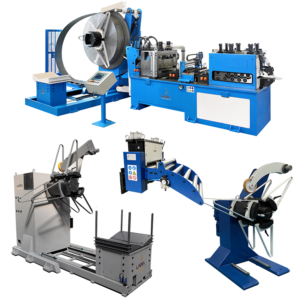
Compact Coil Feeding Lines from LARA
Please contact for prices- Coil Reel Feeders
- Coil Reel Re-Coilers
- Compact Feeders
- Large Feeders
- Straightening Integration
-
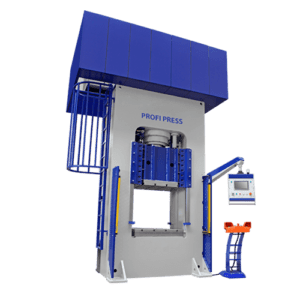
200 Ton Hydraulic Motorised Production Press
Please contact for prices- Lower Table: 800 x 1000 mm
- Upper Table: 720 x 460 mm
- Vertical Daylight: 1000 mm
- Approach Speed: 100 mm/s
- Piston Stroke: 1000 mm
-
300 Ton Hydraulic Motorised Production Press
Please contact for prices- Lower Table: 1000 x 1200 mm
- Upper Table: 1000 x 1200 mm
- Vertical Daylight: 1000 mm
- Approach Speed: 100 mm/s
- Piston Stroke: 1000 mm